Plants can feel the presence of predators and take necessary action. In doing so, they exhibit some behavior that is eerily similar to animals.
Many people talk to the trees, even at the risk of being called crazy, but some recent studies show us that plants might actually be listening in. Other than recognizing sounds, there are other basic senses that plants utilize. Plants fight for their territory, evade predators, seek out food and even trap prey. They are as alive as any animal and, just like animals, they exhibit behavior based on their perception of the environment. Movement in plants is quite sluggish for us to observe, but if we record their growth over a long period of time and then fast-forward the video, the similarities to animals become much more clear.
Recommended Video for you:
Hearing
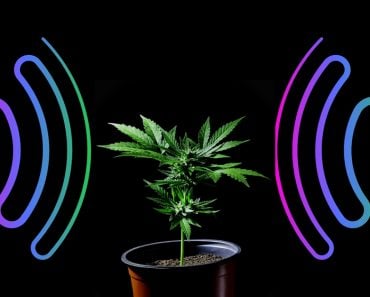
Plants may not swing to the beats of your favorite song, but if they hear the munching sound of a caterpillar, that’s another story. On sensing the approach of a predator, some plants flood their leaves with chemical defenses that are specifically designed to ward off attackers. For example, Thale Cress (Arabidopsis thaliana) produces a large amount of mustard oil in its leaves, and when the unknowing caterpillar consumes too much mustard oil, it succumbs to the poison and dies.
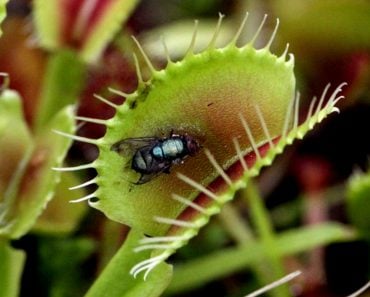
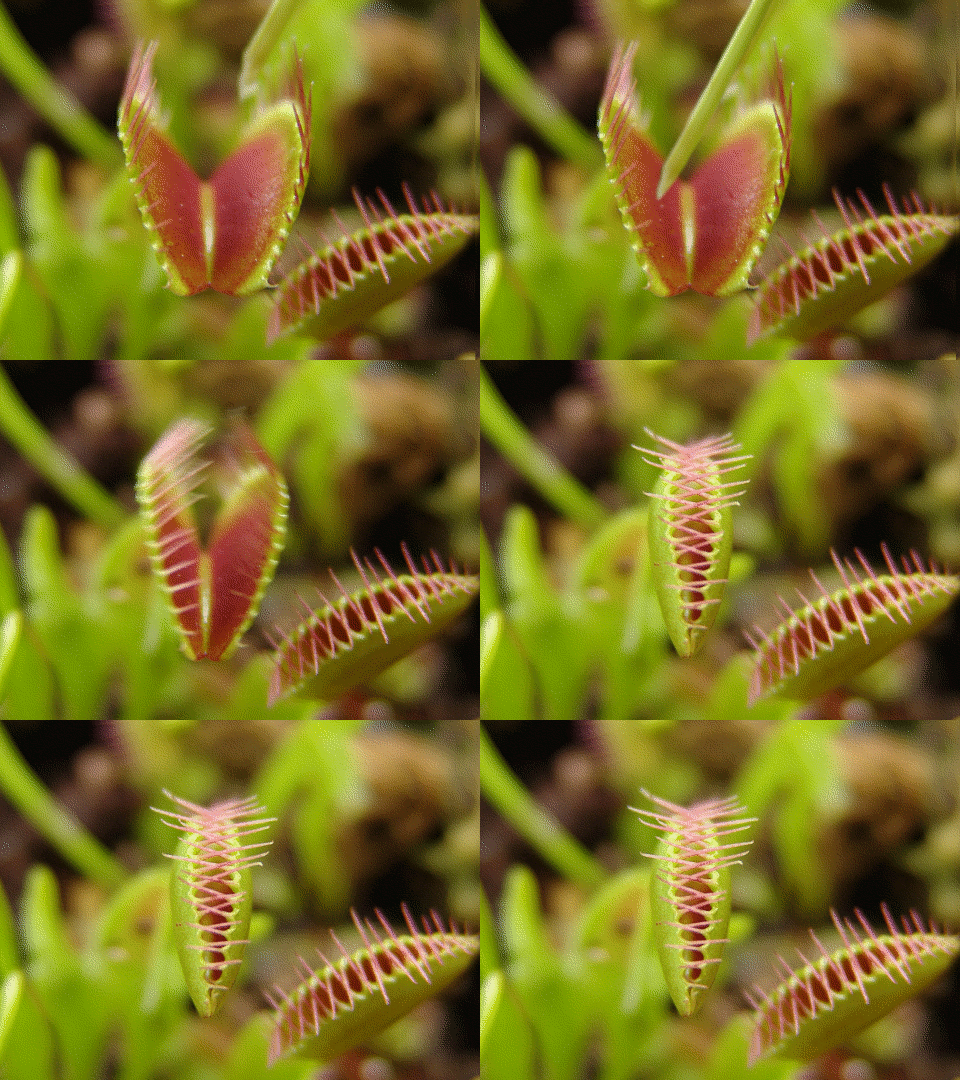
This apparent sense of touch can also be used for trapping prey. The mechanism by which the Venus Flytrap feels its prey is very similar to the way humans feel a fly crawling on their arm. Touch receptors in your skin sense the insect and activate an electrical current that reaches your brain, which registers the fly’s presence and elicits the proper response (SMACK!). Likewise, when a fly rubs up against the Venus Flytrap’s hairs, it induces a current that radiates throughout the leaves. This activates channels in the cell membrane and the trap springs shut, all in less than one-tenth of a second.
Roots of some agricultural crops and forest trees display an ability to send signals to other vegetation in the area, in order to warn them of an imminent attack. Intact, undamaged trees near those that are infested with hungry bugs begin pumping out bug-repelling chemicals to ward off the attack. They somehow know what their neighbors are experiencing, and then react to it.
Taste
The mechanism of taste involves soluble chemicals. As we know, when some plants are under attack, they release a variety of chemicals to warn their neighbors. Some of these chemicals are gases, which also work as airborne messengers. These gas molecules diffuse into other plants through the pores on the surface of their leaves, dissolve in the water inside, and then bind to a specific receptor, thus triggering the leaf’s defensive response. Who knew that plants could taste danger?
Considering these examples, we can be sure that plants are much more similar to animals than we previously thought. The illusion of their ‘lack of behavior’ stems from the fact that plants don’t move as much as animals. If we were to record their lives and then fast-forward the entire thing, their behavior would become much more noticeable. Also, it is important to note that plants will certainly mind if you put on heavy music, touch them without their permission, come near them dressed as Justin Bieber, or approach when you haven’t taken a bath in a really long time. Plants would probably find these things uncomfortable, but then again… who wouldn’t?
References (click to expand)
- Osakabe, Y., Yamaguchi-Shinozaki, K., Shinozaki, K., & Tran, L.-S. P. (2013, January). Sensing the environment: key roles of membrane-localized kinases in plant perception and response to abiotic stress. Journal of Experimental Botany. Oxford University Press (OUP).
- GOMEZGOMEZ, L. (2004, November). Plant perception systems for pathogen recognition and defence. Molecular Immunology. Elsevier BV.
- Santamaria, M., Arnaiz, A., Gonzalez-Melendi, P., Martinez, M., & Diaz, I. (2018, May 3). Plant Perception and Short-Term Responses to Phytophagous Insects and Mites. International Journal of Molecular Sciences. MDPI AG.