Table of Contents (click to expand)
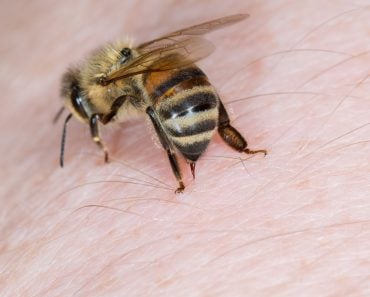
The main difference between venom and poison is that venom must be injected into the bloodstream of a victim in order to be lethal, while poison has lethal characteristics when its ingested.
While venom must be injected into the bloodstream of a victim in order to be lethal, poison has lethal characteristics when its ingested. That’s the basic and most important difference between venom and poison.
In the wild, every animal is either a predator waiting to kill another animal, or prey, doing its best not to become another beast’s dinner. There’s nothing personal about this; it’s just the good old food chain doing its thing.
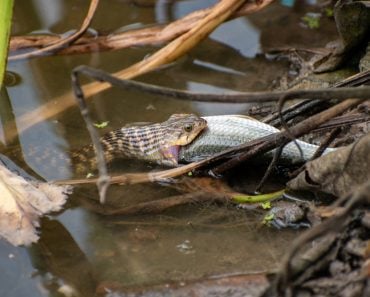
But even among the hordes of wild animals living in the wilderness, some do stand out. For instance, consider a venomous snake. A predator of that snake doesn’t need to just hunt it down, but must also be cautious while eating it, as a snake is filled with venom.
In addition to that, the saliva of these predators does a great job at breaking down food into smaller pieces, while the enzymes and white blood cells present in the saliva somewhat ‘clean’ the food of its harmful constituents.
Stomach Acid
Once the ingested food item reaches the stomach, the stomach acid (or gastric acid) does its work. The stomach is home to strong acids, enzymes and a considerable amount of heat, all of which do a fantastic job at ‘denaturing’ venomous proteins. Snake venom, for instance, is primarily composed of proteins, the vast majority of which are broken down in the stomach, just like the proteins found in meat and beans.
When I say that the venom proteins are ‘denatured’ in the stomach, it simply means that the shape of those proteins has changed; therefore, they don’t react with stuff the same way that they’re supposed to.
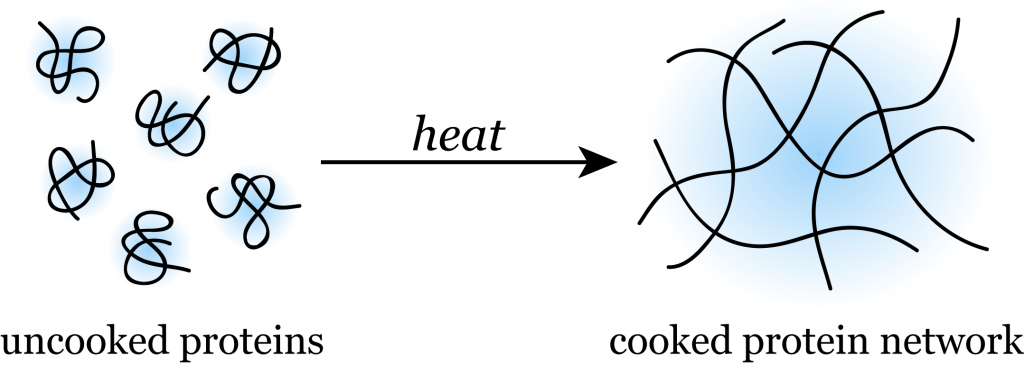
Thus, a snake predator, say, a hawk, doesn’t really have to worry too much about the ingested head of the snake killing it, because the venom of the snake was ingested by the eagle. If, however, the snake bites the hawk (thereby injecting its venom into the hawk’s bloodstream), then the latter would face some serious survival issues.
Think of the whole thing this way: venom is a square box, the bloodstream (of the victim) is a square hole, and the stomach is a circular hole. While the square box (venom) can certainly enter the square hole (bloodstream), it cannot pass through a circular hole (stomach) because it’s not designed to do so.
References (click to expand)
- Venomous Snake FAQs - UF Wildlife Home. University of Florida
- Poisonous and Venomous Snakes. Loyola University New Orleans
- Rattlesnakes - Arizona Poison and Drug Information Center. azpoison.com
- Nelsen, D. R., Nisani, Z., Cooper, A. M., Fox, G. A., Gren, E. C. K., Corbit, A. G., & Hayes, W. K. (2013, September 17). Poisons, toxungens, and venoms: redefining and classifying toxic biological secretions and the organisms that employ them. Biological Reviews. Wiley.