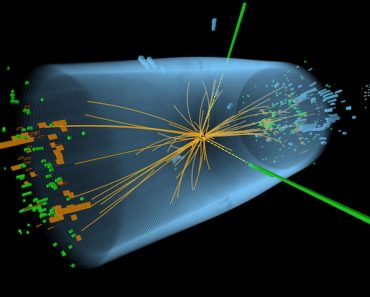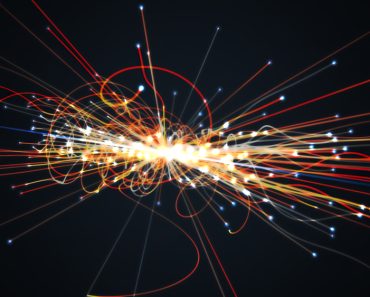
A particle accelerator is a large machine that is used to perform physical experiments involving high-energy, subatomic particles. Particle accelerators come in two types: linear and circular accelerators. The basic functionality of a particle accelerator is to accelerate particles close to the speed of light using electromagnetic fields and contain these speedy particles in well-defined beams.
You have probably read about or heard of particle accelerators in numerous scientific discussions, especially those pertaining to particle physics. For the record, they deserve more attention than they get! For example, the Large Hadron Collider (LHC) – a particle accelerator – is the single largest machine ever built by mankind. That staggering fact might make you wonder… what is it actually? And perhaps more importantly, why should I care what it does?
First things first…
Recommended Video for you:
What Is A Particle Accelerator?
A particle accelerator, in the most basic terms, is a large machine that is used to perform physical experiments involving high-energy, subatomic particles. For more technically-inclined minds, it is a device that accelerates charged particles close to the speed of light using electromagnetic fields and contains these speedy particles in well-defined beams.
Some of the most famous particle accelerators include the Large Hadron Collider (two different ones operating in ion mode and proton mode), the Relativistic Heavy Ion Collider, Tevatron, J-PARC, BEPC II, etc.
All of these benefits of particle accelerators stem from the fact that they can help us unravel the mystery and power of materials and particles by going beyond what we’ve been able to achieve thus far. They have helped us understand more about our universe, as well as the fundamental laws that make up the fabric of our very existence.
All in all, what we ‘do’ know is that particle accelerators are very, very cool and have tremendous potential to change the world, but we haven’t discovered all the ways in which they can be leveraged. By the way, you should also know that one of the many hypothetical roles that a particle accelerator can play is that of a time machine, according to Stephen Hawking himself, one of the world’s leading authorities on the concept of time travel.