Table of Contents (click to expand)
Diatomic molecules are molecules with two atoms in their structure. This could be two atoms attached to one nucleus or two atoms attached to more than one nucleus (heteronuclear).
The world of the very minuscule dictates the characteristics that the world of the very big exhibits. This “world of the small” is inhabited by atomic and sub-atomic particles.
Atoms can be thought of like Lego blocks; they combine together in different ways to make different things. So, the same Lego blocks can make a boat or a bridge, as the atoms that can make a blade of grass or a giraffe.
When two or more atoms come together, they form a molecule. The number of atoms in a molecule denotes the prefix, so a molecule containing two atoms is called diatomic.
There are different types of diatomic molecules. Let’s begin this discussion by better understanding the workings of a molecule.
Recommended Video for you:
Molecules
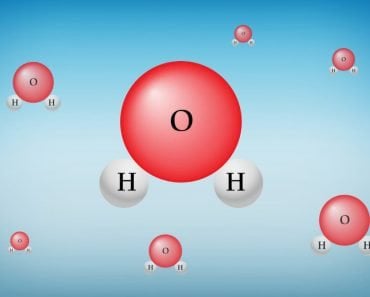
Molecules are the components of matter; they are the smallest particles that exhibit the chemical properties of the element to which they belong. Molecules can be homonuclear, meaning they can consist of atoms from only one chemical element (e.g., Hydrogen (H2)), or they can be heteronuclear, meaning they can be a chemical compound with atoms from more than one element (e.g., Water (H2O)).
Molecules are formed when two or more atoms are held together by chemical bonds. This bond represents a lasting attraction between molecules, ions and atoms. This bond can be a result of the attraction of oppositely charged ions or the sharing of electrons between two atoms.
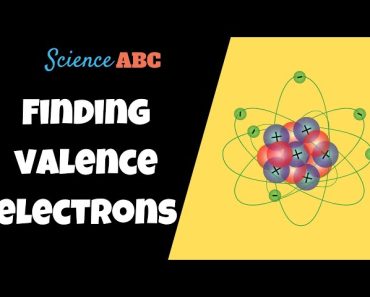
Atoms are stable if their outer layer is either filled or empty. For it to be considered filled, it needs to have 8 electrons in the outer layer, which is called an octet. When this is not the case, the atoms bond to either gain or lose an electron from another atom, or share electron pairs with another atom.
This electron transaction gives way to chemical bonds:
Ionic Bond
This bond occurs when there is a total transfer of electrons from one atom to another. This results in two ions, the atoms that have gained one or more electron are called anions (negatively charged) and those that have lost one or more electron are called cations (positively charged).
Nitric Oxide – NO
Nitric oxide is a colorless gas. A nitrogen atom has 5 valence electrons in the outermost layer and oxygen has 6, so they bond together to become stable diatomic molecules. One electron is left unpaired, which makes nitric oxide a free radical.

In Closing
Some of the most abundant and common elements on our planet are diatomic molecules. Ranging from the homonuclear to heteronuclear categories, diatomic molecules represent a stable state for elements due to the strong chemical bonds that form between valence electrons.