Table of Contents (click to expand)
Their acceleration downwards is affected solely by Earth’s gravity, neglecting the mass of the body. Therefore, their mass has no effect.
Isaac Newton saw objects falling downwards after being suspended in the air all his life, but one fine day, in the year 1665 or 1666, he realized that there had to be a force causing the objects to fall downwards, instead of sideways or even upwards. He applied the same logic to an apple falling from a tree and used the example to devise his Universal Law of Gravitation[1].
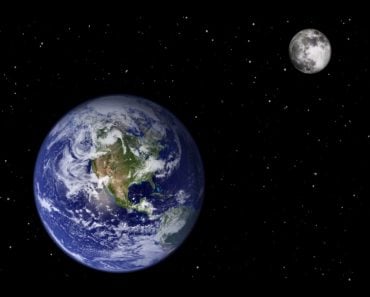
g is different for different planets, depending on their mass. The moon’s gravitational pull is about 1/6th that of the Earth[5], so any object’s weight on the moon would be 1/6th of what it weighs on Earth. Any object that falls towards the surface of the moon will fall at about 1/6th the rate that it would fall towards the surface of the Earth.
So why do a feather and a rubber ball fall to the ground at different times? Well, a feather’s structure and extremely low mass make it susceptible to the force of air pressure, which acts on the feather in a direction opposite to the Earth’s gravitational pull. Most objects, however, are too heavy to be affected by upward air resistance.
Since they’re too light to affect the Earth in any way, the only force affecting the motion of a body falling towards the Earth is g=9.8m/s2.
Therefore, their rate of falling towards the Earth’s surface is independent of their mass.
References (click to expand)
- 6.5 Newton's Universal Law of Gravitation – College Physics. The University of Iowa
- Hirakawa, H., Tsubono, K., & Oide, K. (1980, January). Dynamical test of the law of gravitation. Nature. Springer Science and Business Media LLC.
- Buček, S. (2016, July). Falling Objects And Projectile Motion With Regard The Air Resistance. EDULEARN proceedings. IATED.