Table of Contents (click to expand)
Life in deserts is hard due to the scarcity of food and water. However, plants, animals and humans have adapted in various ways to survive a life in deserts.
Can you imagine living in the scorching heat of a desert? If you’ve ever spent any time in one, it feels like it can’t sustain any life due to its arid climatic conditions. So how do certain plants and animals survive in such weather?
Yes, there are living things apart from camels and cacti in the desert! In fact, there is a history of thriving civilizations in our planet’s deserts with a total population of nearly 1 billion people!
If you think deserts are a waste of land and lack any useful resources, think again! Deserts have massive oil reserves, especially in the Arabian Desert (Middle East), which is a very economically useful resource.
By the end of this article, your view will be forever changed about the utility of deserts. More specifically, let’s dig into the adaptations of plants, animals and humans that call these challenging realms “home”.
Clothing
Clothing for desert-dwellers is usually white to reflect sunlight and the person is covered fully, only exposing their face and hands. This is done to protect the individuals from heat, sand, wind and bitterly cold nights.
The preferred desert clothing is loose and versatile. A long, full-sleeved robe is called thobe, a sleeveless cloak is called abaya, a pullover shirt is djebba and a rectangular piece of cloth used to cover the head is called kaffiyeh.
Shelter
It is already difficult to find natural shelter in the deserts. Manmade shelters include cliff-dwellings constructed with thick walls and small windows to allow limited sunlight to enter, while also keeping away sand and dust. Since the day and night temperatures in the desert vary greatly, this type of shelter provides good insulation and limits the change in temperature between day and night inside the walls.
Nomadic – Nature
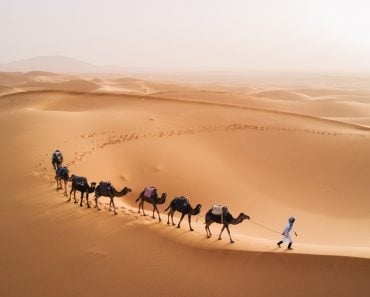
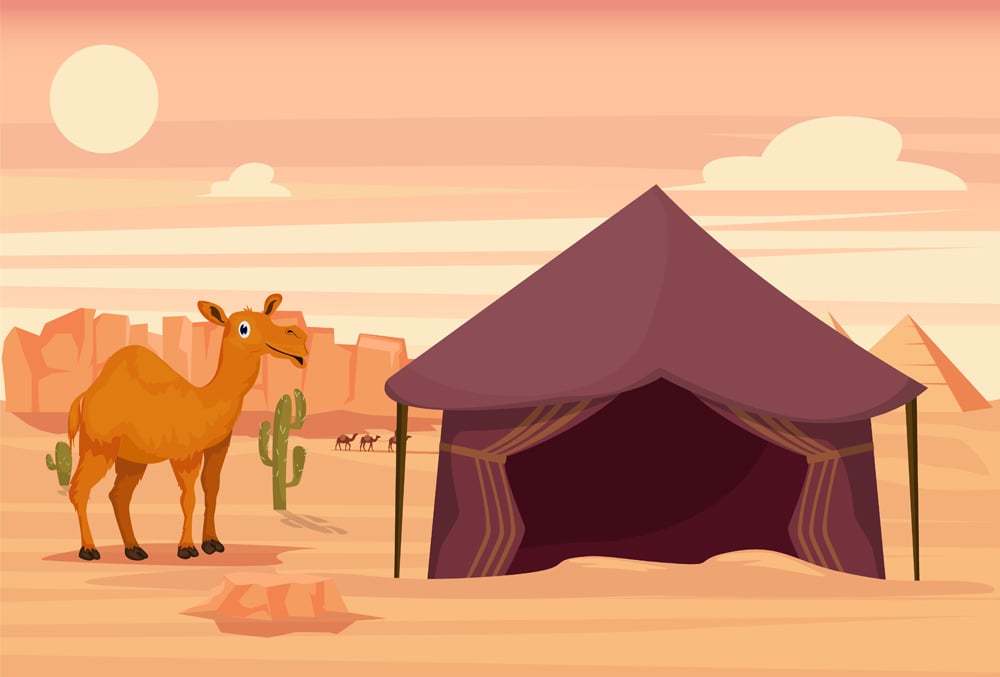
The scarcity of food and water in the desert led many civilizations to live as nomads. This means they have no permanent settlements. They make tents from thick cloth to keep dust and sand out, but this still allows a cool breeze to pass through the cloth. The tents are portable and can be carried on pack animals, such as camels, donkeys and horses. These nomads graze animals like sheep and goats.
So, do you still feel like deserts are lifeless? I’m sure your opinion has changed since the top of this article… Although life in deserts is undeniably tough, it has led to magnificent adaptations by both plants and animals, which shows us that once again, life will always find a way!