Table of Contents (click to expand)
There are many things you have evolved to do that prehistoric humans were likely unable to accomplish. Since humans began agriculture, we have evolved the ability to drink milk as adults, dive into deep waters, and live high up in the mountains.
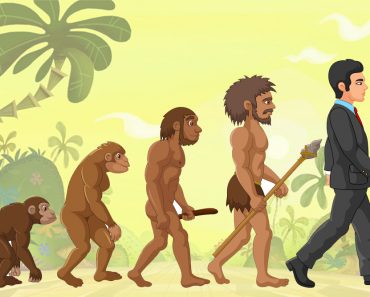
When we think of evolution, we think of primitive life forms evolving into more advanced ones. Take, for example, the famous (and meme-able) portrait of the Devonian fish finally squirming onto land, ready to colonize a new niche.
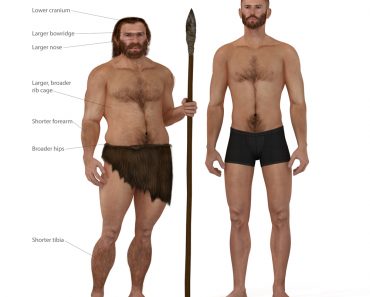
Very rarely, however, do we think of humans as a species in the midst of the evolutionary process. Even if we do think of humans, we tend to think of the primates from which we diverged or the Neanderthals that died out so many thousands of years ago. We rarely think of present-day humans, more specifically, Homo sapiens.
How Does Climate Change Play Into Human Evolution?
The drastic isolation of human populations or major environmental instability might be the future driving forces of major macroevolutionary mechanisms.
Climate change will literally have an effect on everything. From agriculture and migration to health and environmental factors, nothing will be spared. Recent studies conducted during and after COVID-19 do indicate that even pandemics might become more common in the future, unless certain climate-related risks are mitigated.
If the climate continues to change at the current pace, so will the environments around us. This is big news for natural selection, as it doesn’t currently play as big a role in the evolution of our species as it used to. However, in the future, we can expect the full force of this evolutionary mechanism to be unleashed as climate change enables large-scale environmental shifts.
Conclusion
It is incredibly hard to picture the “future” of human evolution. There are so many questions we have to answer, such as what do future humans look like, and how can we expect natural selection to work in the unnatural environments in which we now live?
However, what we can say with full certainty is that humans are definitely still evolving. For as long as a species satisfies the criteria of producing heritable changes and is subject to competition between individuals (for reproduction), there will be evolution!
What we can also say with certainty is that our planetary climate will definitely be one of the driving forces of ongoing evolutionary change. Whether that is through direct effects, such as population migrations based on diminishing habitats, or through indirect effects, such as pandemics caused by increased contact between animal and human populations, micro- and macroevolutionary changes in humanity’s future are practically inevitable.
References (click to expand)
- Bajau people 'evolved bigger spleens' for free-diving - BBC. BBC Online
- The mysteries of Tibet - Understanding Evolution. University of California, Berkeley
- Climate Effects on Human Evolution. Smithsonian Institution
- AL Gillen. The Relationship between Sickle Cell Anemia and Falciparum .... Liberty University
- Simonson, T. S., Yang, Y., Huff, C. D., Yun, H., Qin, G., Witherspoon, D. J., … Ge, R. (2010, July 2). Genetic Evidence for High-Altitude Adaptation in Tibet. Science. American Association for the Advancement of Science (AAAS).
- Ilardo, M. A., Moltke, I., Korneliussen, T. S., Cheng, J., Stern, A. J., Racimo, F., … Willerslev, E. (2018, April). Physiological and Genetic Adaptations to Diving in Sea Nomads. Cell. Elsevier BV.
- Elguero, E., Délicat-Loembet, L. M., Rougeron, V., Arnathau, C., Roche, B., Becquart, P., … Prugnolle, F. (2015, May 4). Malaria continues to select for sickle cell trait in Central Africa. Proceedings of the National Academy of Sciences. Proceedings of the National Academy of Sciences.