Table of Contents (click to expand)
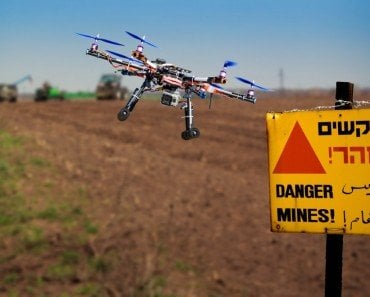
Drones are robotic aircraft that are controlled remotely by a pilot or by an onboard computer. They can be used for a variety of purposes, including surveillance, photography, and recreation.
Drones, which are frequently used for filming, military surveillance, and recreational activities, are named after a term from science fiction. Drones fall under the intersection of aerospace, robotics, and mechatronics. They can range from entirely autonomous military-grade drones to your average remote-controlled drones, which you might see a kid flying in the park.
Unmanned Aerial Vehicles (UAVs) is another name for drones.
In a quadcopter, we don’t need a tail rotor. Do you know why? Because we can combat that per-propeller torque with an equal and opposite torque (the propeller opposite it). The neighboring propellers cancel out each other’s torque effect. This allows quadcopters to hover exceptionally well.
If you were to hover a helicopter and apply more power, there would be more torque, and more power would be needed from the tail rotor. This takes many hours to master, especially to make it look smooth. These problems don’t exist in multi-rotor drones because power increases are always done equally, and the opposite is true in the propeller system. We want to do more than just hover our multi-rotor.
If we want to move forward, then both forward propellers will apply less power, whereas the back propellers will add more. This principle applies to all roll directions.
Yaw movement is different, however. The picture above depicts what would happen if we wanted our craft to yaw left, meaning that we want that torque reaction to be more prominent in the left direction. Thus, the quadcopter gives more power to the propellers with a left torque direction (clockwise-spinning propellers).
Ascending and descending are very simple. Power is either increased to the entire propeller system to ascend or decreased to make a descent.
You can also fly your quadcopter in a multitude of ways. You can be in slow yaw while ascending and applying a slight roll. The algorithm and codes built into the flight computer consider these directions and apply the necessary power to each propeller. This enables the quadcopter to maintain a stable and smooth flight. With all this in mind, the next time you fly your drone, you’ll know exactly how much planning and delicate technology is required to fly it!
Last Updated By: Ashish Tiwari
References (click to expand)
- Marris, E. (2013, June 12). Drones in science: Fly, and bring me data. Nature. Springer Science and Business Media LLC.
- Hildebrand, J. M. (2019, July 13). Consumer drones and communication on the fly. Mobile Media & Communication. SAGE Publications.
- Ruttner, F. (1966, September). The Life and Flight Activity of Drones. Bee World. Informa UK Limited.
- Watkins, S., Burry, J., Mohamed, A., Marino, M., Prudden, S., Fisher, A., … Clothier, R. (2020, January). Ten questions concerning the use of drones in urban environments. Building and Environment. Elsevier BV.