Table of Contents (click to expand)
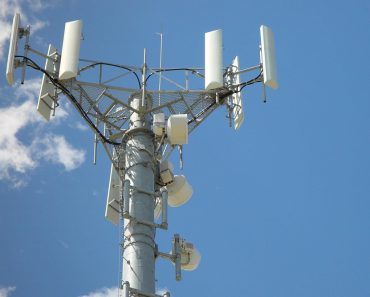
A cell tower is an antennae that transmit and receive RF signals (radio frequency) from mobile phones. Cell towers are often 50 to 200 feet in height. They can be standalone structures, such as lattice frame or steel poles, or they can be affixed to other structures.
A cell tower (also called a cell site) is a cellular-enabled mobile device tower where an antennae and other electronic communications equipment are placed—usually on a tower, radio mast, or other raised structure—to facilitate communication through a cellular network, i.e., enable your mobile devices to function.
If you’re like roughly half of your American neighbors, then you own a cordless phone system that plugs into your home telephone line. A cordless handset, as the name suggests, connects wirelessly to what is technically called a base station—allowing you to have uninterrupted voice communication, while maintaining a link to the wires of the public switched telephone network (PSTN). For the uninitiated, PSTN refers to the international telephonic system standard that uses copper wires to carry analog voice data. When it comes to their working principle, a cellular tower and a base station that enables voice and data services for an Android or iPhone aren’t much different, except that the towers are built to cover a wide geographic area much larger than your home. Moreover, a cell tower is designed to simultaneously support hundreds of devices and operate on different radio frequencies. Cell sites allow users to maintain their connections while traveling from one base station to another, even while driving at 100 miles/hour on a fast-lane highway.
Future Of Cell Towers
With the introduction/discovery of efficient digital protocols associated with booming and upcoming 4G and 5G technologies, complimented by the additional spectrum availability, many mobile network providers are now looking to recombine cell towers. This would permit network operators to decrease the number of towers being used. This would, in turn, bring down the operating expenses associated with each tower. All of this would translate into increased revenues and profits for telecom players. For example, a while back, Sprint eliminated close to one-third of its cell sites. This translated into a reduction of almost 20,000 cell towers. We might see more operators following suit in the near future.
References (click to expand)
- Yang, J., Varshavsky, A., Liu, H., Chen, Y., & Gruteser, M. (2010, September 26). Accuracy characterization of cell tower localization. Proceedings of the 12th ACM international conference on Ubiquitous computing. ACM.
- Cell Phone TowersCell Phone TowersFinding the Best Place For a New Finding the Best Place For a New Cell Tower in MarbleheadCell Tower in Marbleheadby Daniel Hudsonby Daniel Hudson - w3.salemstate.edu