Table of Contents (click to expand)
The problem with traveling at the speed of light is that accelerating to that speed takes a great deal of time and energy. It would take a few months to safely accelerate a human to that speed
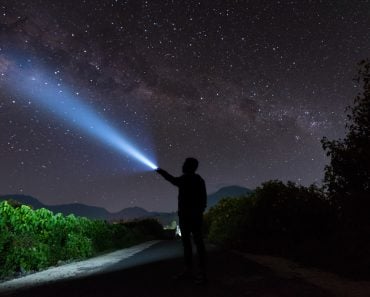
How often do you gaze up at the night sky? When is the last time you stared into the vastness of space and were mesmerized by the faint white stretch of the Milky Way and the countless other stars that light up the darkness? While observing the night sky, have you ever dreamed of reaching for those same stars? Or sending ships all the way up into the cosmos to explore places beyond our solar system?
The train starts off with a few brave passengers on board. After that, things start to get a little tricky. From the perspective of the passengers, the train travels at the speed of light for an entire week. However, this train isn’t just traveling through space; it’s also traveling through time. Allow me to explain: once you approach the speed of light, the universe slows time down around you just enough to ensure that you never attain that speed.
The difference in time is very significant. What the passengers felt as just one week would actually be an entire century for the rest of the planet. The passengers literally bought “A ticket to the Future”. And unfortunately, it was only a one-way!
This phenomenon may seem a bit confusing at first, and may take a while to settle in. However, once it does, we realize the true ramifications of space exploration and traveling at the speed of light. Even if the human race advances to create rockets that travel at the speed of light, the astronauts onboard those ships would be taking a one-way journey to the future. A one-year journey aboard such a ship would send the astronauts thousands of years into the future. Even then, they’d still be just one-fourth the distance to Proxima Centauri!
It Doesn’t End There
The other problem with traveling at the speed of light is that accelerating to that speed takes a great deal of time and energy. It would take a few months to safely accelerate a human to that speed and the same amount of time to slow a human down. This is because humans can only tolerate a limited number of g’s. At best, trained fighter pilots can bear up to 12 g’s before passing out. The astronauts aboard such a fast ship would have to constantly bear the G force over a period of months, both while speeding up and slowing down.
Traveling through space is lonely. Furthermore, the fact that traveling through space at high speeds means that you’d also be traveling through time makes it even scarier. To add one more level of terror, the planet that those travelers return to after their journey would be completely different compared to the way it was when they left. Generations will have passed. The planet they return to would be very different from what they called home.
Fun Thought: Ever thought about how it would feel to live your entire life at that speed? It sure would be lonely, right? Maybe that’s how the Flash feels. His entire world might just be too slow for him. Maybe that’s why the Flash needs friends.
The one thing we know for sure is that the speed of light is the ultimate speed. However hard we try, we’re always going to be restricted by that universal constant.