Table of Contents (click to expand)
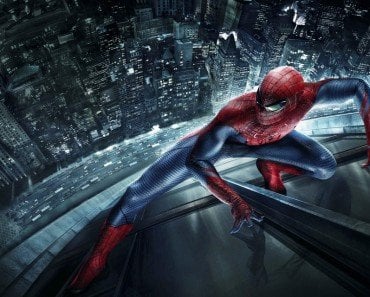
If someone could run as fast as The Flash, they would be able to scale buildings by running up their sides.
For people who aren’t into superheroes, let me bring you up to speed with a thing or two about one popular superhero named the Flash.
The Flash can, however, move his feet back and forth against the surface of the building, which would give the impression that he is, in fact, running. What he would actually be doing here is travelling a distance equivalent to the height of the building in the time between consecutive steps. That seems totally impractical, doesn’t it?
It seems impractical because it is indeed impossible for a normal fella with regular abilities. But not for the Flash.
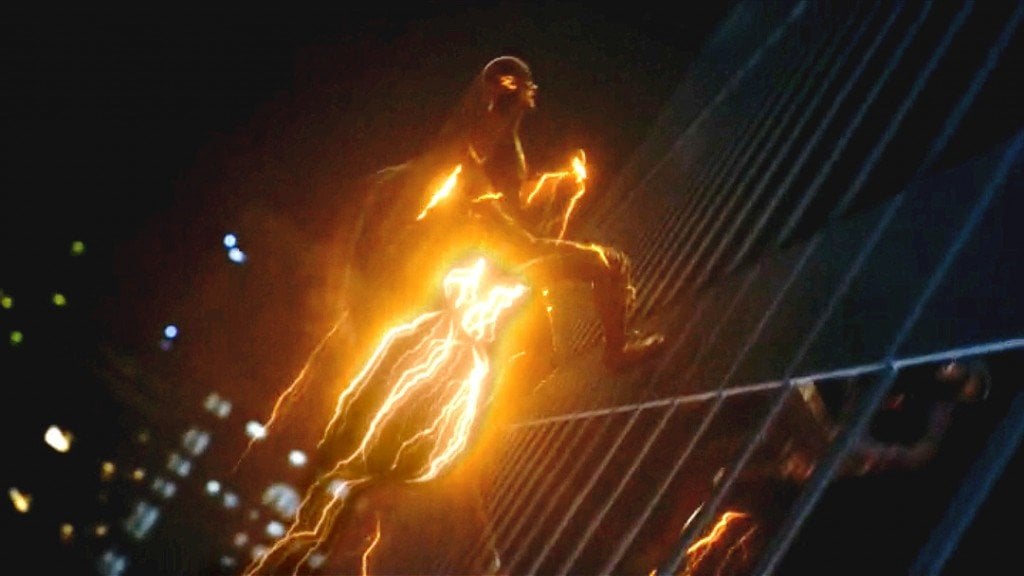
When the Flash runs on a plain surface, he pushes on the ground at an angle with the surface of the road; consequently, the force that the road exerts back on him is also at an angle with the surface. The net result is that he accelerates in both the horizontal and vertical direction. The larger the horizontal velocity, the further he advances before gravity overcomes the (relatively) small vertical velocity and pulls him back to the ground, making him take another step to keep moving ahead.

People who run really fast (including the Flash) can have both their feet airborne between steps, thanks to their higher-than-normal vertical velocity. If the Flash bounces about 2 cm vertically with each step, then he remains airborne for around one-eighth of a second. Even if the Flash runs at a speed of 3,600 mph, he could travel around 660 feet before he had to take another step. And that’s an insanely underestimated assumption about his speed; according to the comics, the Flash travels faster than light itself!
Anyone can scale buildings just by running up their sides, provided they’re fast enough. Since the Flash is faster than the fastest thing we humans know of (i.e., light), he can undoubtedly run up the side of a skyscraper. The physics checks out on this one.
Kudos, DC comics!
Note: This article is inspired by “The Physics of Superheroes” – a book authored by James Kakalios – a University of Minnesota professor who turned to comics and superheroes for his Physics lectures!