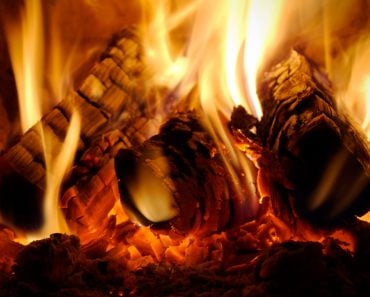
Food turns black when it’s burnt because it contains carbon. When carbon is heated, it undergoes combustion and forms carbon dioxide gas and burnt carbon, which is black in color. However, there’s more to it than that. Not all forms of carbon are black, and the color of burnt food is also affected by the way the constituent atoms are organized.
You may have seen food turn black when it gets overheated, or when it’s left on the stove longer than it should have been. Have you ever wondered what brings that black hue to burnt food?
Recommended Video for you:
Presence Of Carbon In Almost All Organic Matter
Not just food, but most organic matter, is made of carbon, along with a few other elements, including oxygen, hydrogen, nitrogen, phosphorus etc. Thus, when you burn food, it usually turns black, as the carbon present inside it undergoes combustion and leads to the formation of carbon dioxide gas and burnt carbon, which is black in color.
A carbon atom has 4 valence electrons. As you may notice in the image given above, every carbon atom in diamond is connected to 4 other carbon atoms, while in graphite, every carbon atom is linked to only 3. Thus, the extra electrons that don’t participate in any bond formation remain ‘delocalized’, and are sort of shared among all carbon atoms via a shared electron cloud.
Color Of Carbon-based Substances
Everything gets its color based on how light rays interact with it. When light rays hit an object, they may be reflected, refracted, scattered or absorbed. Which color (of light) is absorbed by an object is totally dependent on the latter’s atomic structure.
Diamond is shiny because its carbon atoms form a regular, well-ordered lattice, which is why diamond absorbs very few frequencies of light. Consequently, diamond does not absorb/scatter light in the visible spectrum; hence, it appears transparent and shiny. (Note: diamond brilliance is also related to total internal reflection, which is another optical phenomenon).
On the other hand, if you consider materials such as graphite, which do not have as well-ordered a structure as diamond, and have free delocalized electrons, it absorbs/scatters a broader range of frequencies, including colored light. This causes graphite to have a characteristic blackish hue, since it doesn’t reflect almost any color back to your eyes.
Carbon And Burnt Food
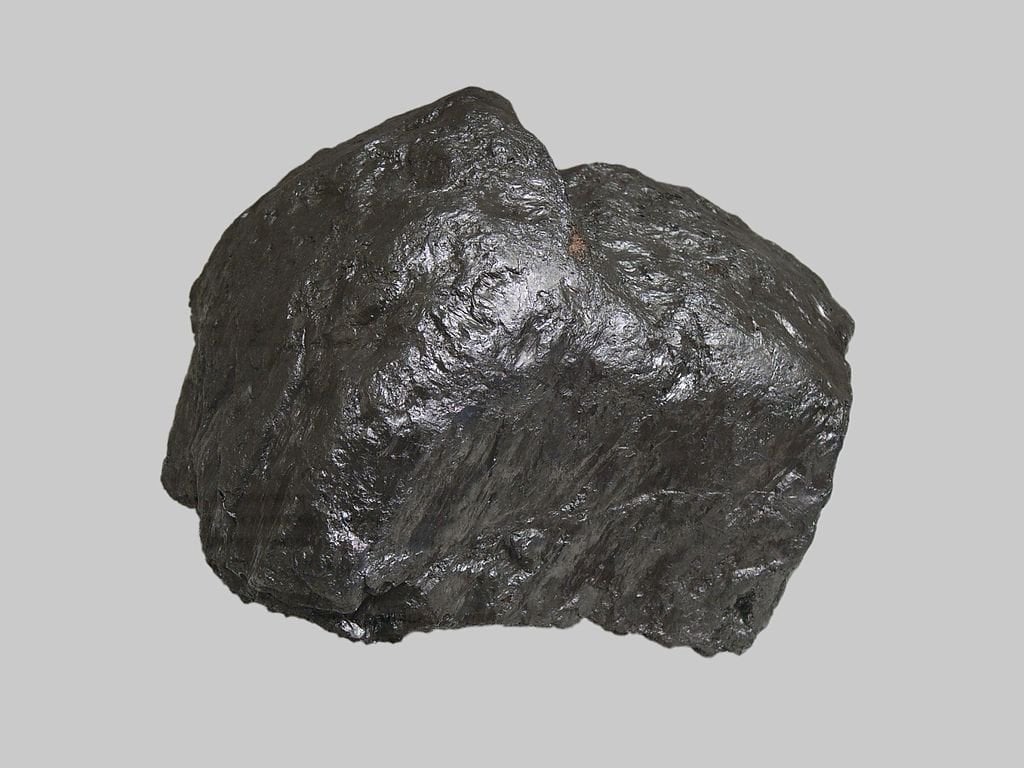
It’s now clear that burned food contains carbon. However, a noteworthy thing is that burned food is mostly amorphous carbon, graphite and other miscellaneous random carbon nanostructures. These structures absorb/scatter all visible light falling on them, thereby imparting a blackish color to burnt food, or any other completely burnt organic material, for that matter.
So, it’s not just the stuff that’s left behind that gives burnt things their black color, but also how the constituent atoms inside that stuff are organized, as that plays a major role in determining the color of burnt organic materials.
References (click to expand)
- Burning to Carbon | Physics Van | UIUC. The University of Illinois Urbana-Champaign
- CI Ceccarelli. Hydrothermal Carbonisation - KIT - IKFT. The Karlsruhe Institute of Technology
- Chapter 2. Wood carbonisation and the products it yields. The Food and Agriculture Organization of the United Nations
- Burning to Carbon | Physics Van | UIUC. The University of Illinois Urbana-Champaign